
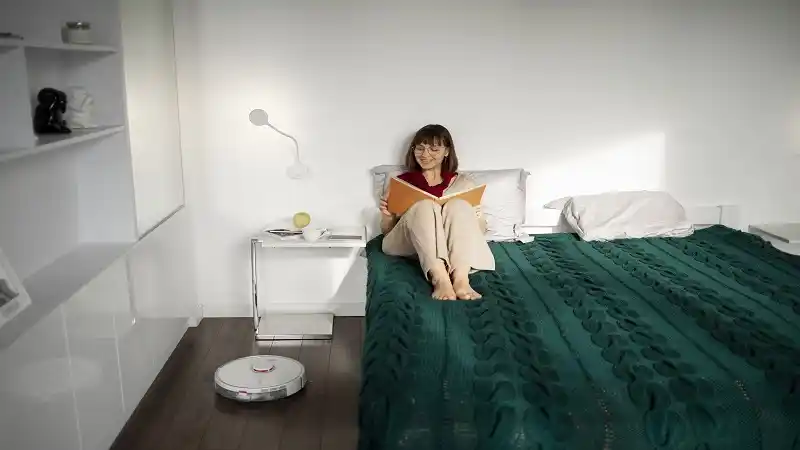
It seems simple enough; you lie down in bed, close your eyes, and sleep happens. If only it were that easy. Most of us attribute our sleepless nights to stress or screen time. However, there’s one not-so-obvious element that could be affecting your sleep quality (and it’s not what you think).
Humidity. Believe it or not, the humidity levels in your bedroom play a huge role in how well you sleep at night. And luckily, there’s a simple fix: a dehumidifier.
Why You Should Get a Dehumidifier for Your Bedroom
What is a Dehumidifier?
Dehumidifiers are household appliances that remove humidity from the air in your home. Air is sucked into the unit and pulled over cold coils, with moisture condensing on them and dripping into the tank. The dried air is then pushed back out into your room.
Most households in humid areas have indoor humidity levels well above 60%. Ideally, you want to keep your bedroom humidity level between 30-50%.
How Does Humidity Affect Sleep Quality?
As you start to fall asleep, your body temperature begins to drop slightly. High humidity makes it difficult for your body to cool down at night. Sweat won’t easily evaporate when the air is saturated with water. This means you’ll feel hot and sticky even if your thermostat says otherwise.
Physical discomfort keeps your mind alert. You won’t be able to achieve those deep, relaxing stages of sleep if you keep waking up. You might even sleep through the whole night only to feel tired and groggy the next morning. It’s not about how much you sleep. It’s about how well you sleep.
When you lower the humidity in your bedroom, you allow your body to cool properly as you sleep. This translates to fewer awakenings and more restful sleep.
Combat Dust Mites and Allergens
Ever wake up with a scratchy throat or itchy eyes but feel fine during the day? Dust mites may be to blame. Dust mites are microscopic bugs that live in your mattress, pillows, and bedding. As they move around, their waste particles become airborne and can irritate your lungs while you sleep.
High humidity promotes the growth of dust mites in your bedroom. Research has shown that dust mites can be greatly reduced by keeping humidity levels below 50%. A dehumidifier will maintain that level for you.
Reduce Symptoms of Asthma
Like dust mites, mold grows best in warm and humid environments. You may not see it, but mold can be hiding behind walls, underneath floors, and even on window sills in your bedroom. While you sleep at night, you can breathe in mold spores without even knowing it.
Mold spores can trigger asthma symptoms and lead to sinus congestion, headaches, and fatigue. Anyone with asthma or respiratory problems can benefit from reducing humidity in their bedrooms.
NHS mentioned to us that a dehumidifier prevents mold growth by eliminating excess moisture from the air. There’s less moisture for mold spores to feed on, and they’ll be less likely to spread.
Pick the Right Size Dehumidifier
How Big of a Dehumidifier Do I Need for My Bedroom?
There are a variety of sizes when it comes to dehumidifiers. Since you’ll be using yours at night, you’ll want one that is as quiet as possible. Ideally, look for a unit that is rated under 50 decibels. Many modern dehumidifiers run almost silently, but you don’t want something that will keep you awake with white noise.
You’ll also want to make sure you purchase a size that fits your room. A small bedroom dehumidifier is ideal for spaces under 300 square feet. These typically range from 30 points. If you have a large master bedroom, look into a 50-pint dehumidifier. Check the manufacturer’s recommendations before purchasing to ensure ideal results.
Look for features that will make your life easier, like a built-in humidistat. This will allow you to set a desired humidity level, and the unit will automatically shut off when it reaches that level (preventing over-drying your space).
Many dehumidifiers come equipped with an auto-shutoff feature that turns the appliance off when the water tank is full. You can also opt for a model that hooks to a drain hose, so you never have to manually empty the tank.
Where Should I Put My Dehumidifier in My Bedroom?
Placement is key when it comes to maximizing your dehumidifier’s potential. You don’t want to trap the unit against walls and furniture. Allow room for air to flow in and out of the dehumidifier.
You may also want to avoid placing your dehumidifier too close to your bed. While these units are quieter than most, you don’t want the fan buzzing right next to your ear all night.
Feel free to turn the dehumidifier on a few hours before bed so it can “condition” the air. Most brands will shut off once the air reaches your desired humidity level and then cycle on as needed to maintain that level. If your room retains the humidity well, you won’t need to keep it on all night.
Pro Tip: Don’t forget to empty the water tank. If the tank is full, your unit will not work. You might as well not turn it on at all if you forget. Make sure to empty the tank daily until you develop a habit of checking it.
Case Study: Getting Better Sleep with a Bedroom Dehumidifier
Location: Birmingham, UK
Humidity Problem: A couple sleeping in an apartment found themselves waking up multiple times per night feeling congested. Dust mites made their allergies flare up regularly, and the bedroom always felt stuffy. Air conditioning helped with cooling, but cleaning didn’t seem to improve air quality or sleeping problems.
How We Fixed It: They purchased and placed in operation a 30-pint bedroom dehumidifier with a built-in humidistat and auto shut-off control. The dehumidifier kept their bedroom at about 40–50% RH, limiting the moist feeling of the air and dust mite colonies.
What Happened:
After one week, they noticed fewer allergies. “We weren’t waking up sneezing or rubbing our eyes all night!”
The couple slept better than ever! “We wake up feeling energized, rather than groggy.”
Condensation and mold buildup decreased from the windowsills.
It’s quiet enough (less than 50 dB) that they can leave it on all night without hearing it.
Their Sleep Environment: With proper sizing and placement of their bedroom dehumidifier, they slept better than ever before!
Link / Source to Case Study: https://www.meaco.com/collections/bedroom-dehumidifiers#:~:text=Reducing%20the%20humidity%20level%20in,level%20that%20works%20for%20you.
Dehumidifier FAQs — Better Sleep Environment
Can humidity impact my sleep?
Humidity affects your body’s ability to cool down naturally at night. This can cause sleep issues like restlessness, waking up with night sweats, and an inability to reach deep sleep. Try keeping your room between 30–50% RH for optimal sleep.
Will bedroom dehumidifiers help with allergens?
It sure can! Dust mites and mold love humidity. Dehumidifiers can help you limit dust mite colonies and prevent mold growth in your home.
What size dehumidifier do I need to buy for my bedroom?
Bedroom Size Humidity Capacity
- Small (< 300 sq ft.)30 Pint
- Large (> 300 sq ft.)50 Pint
Tip: Look for manufacturer details to see which rooms their dehumidifiers are ideal for.
Where should I put a dehumidifier in my bedroom?
Ideally, you’ll want to keep your dehumidifier out in the open, away from walls/furniture for better airflow. Keep it away from your bed so you don’t hear it while you sleep. You can typically get away with turning a bedroom dehumidifier on a few hours before bed to “condition” the air.
Will a dehumidifier help my asthma symptoms?
As humidity decreases, mold is less likely to grow in your home. Not only will this help with preventing asthma, but also help with sinus congestion. Plus, dust mites struggle to survive in dry air.
Do I need to empty my water tank daily?
Yes. When your tank is full, the unit will not work until it’s manually emptied. Many dehumidifiers allow you to hook up a drain hose to avoid emptying the tank daily (great for nighttime! ).
Q7: Will my sleep be disturbed by a dehumidifier?
Most residential bedroom dehumidifiers are designed to be whisper-quiet. The average bedroom unit is about 50 decibels or less. That’s around the sound of someone watching TV or a refrigerator running in the kitchen. Some models come with sleep mode or lower fan speeds you can use at night.
You’ll Sleep Better in the Long Run
Sleep is important. When you don’t get enough of it, you may experience adverse effects like mood swings, lack of focus, a weakened immune system, and weight gain over time. We spend hundreds or even thousands of dollars on a good mattress and pillows. But what about the air you’re breathing?
A dehumidifier is a simple solution to improve the air quality in your sleep environment. Dehumidifiers help you sleep by eliminating the things you can’t see. Fewer allergens in your bedroom means no mold growth, reduced risk of dust mites, better sleep quality, and easier breathing. Give your body the chance to do its job. See More